First the Obama Administration told us that if we own a business we did not build it--somebody else did that for us. SeeThe Government Giveth and the Government Taketh Away for more info. Now this week, the DNC wants us to know that we belong to the government. In a highly circulated video aired at the convention this week, a narrator tells us that "government is the only thing that we all belong to." He goes on to explain that we have various religions and clubs, but all of us belong to the government and that is what unites us as Americans.
See the video here:
After the video began receiving a lot of negative feedback, the Obama Campaign began immediate damage control insisting that they had nothing to do with the video. Regardless of their protestations of innocence, however, the fact remains that the video aired as part of the DNC convention in Charlotte.
This "Property of Uncle Sam" mentality is a huge part of what is wrong with our country today. The current administration apparently believes that they have a right to take over property, water rights, healthcare, and all other aspects of American life. And now we know why--we belong to the government, first and foremost so whatever we have they by rights own since they own us. To identify ourselves as belonging to the government is to deny individual freedom and individual rights. It is a dangerous theory of the relationship between the state and the people that can only end in totalitarianism.
In the Gettysburg address, Lincoln spoke eloquently of government by the people, for the people, of the people--not people by, of and for the government. In the next 60 days, our country gets to make a decision about what kind of a country we want to be--a country in which the government owns the people, controls all of our property and micromanages our lives, or a country in which we own the government and are willing to take responsibility for firing unresponsive politicians and replacing them with elected officials who understand that at the end of the day they answer to us. It is a decision that will affect the future of our nation for generations. May we all choose wisely.
Alexandra Swann is the author of No Regrets: How Homeschooling Earned me a Master's Degree at Age Sixteen and several other books. Her newest novel, The Planner, about an out-of-control, environmentally-driven federal government, was released June 28, 2012. For more information, visit her website at http://www.frontier2000.net
Scottish action on payday loans: update

The event is being hosted by Kezia Dugdale MSP, Shadow Youth Employment Minister on Wednesday 24 October 2012, and will bring together a wide range of national consumer, civil society and advice bodies.
GLC believes the Scottish Government can introduce a Fast Track Debt Arrangement Scheme targeted at payday loans under existing powers in the Debt Arrangement and Attachment (Scotland) Act 2002 as amended.
New fast track debt arrangement scheme for usury rate payday loans?
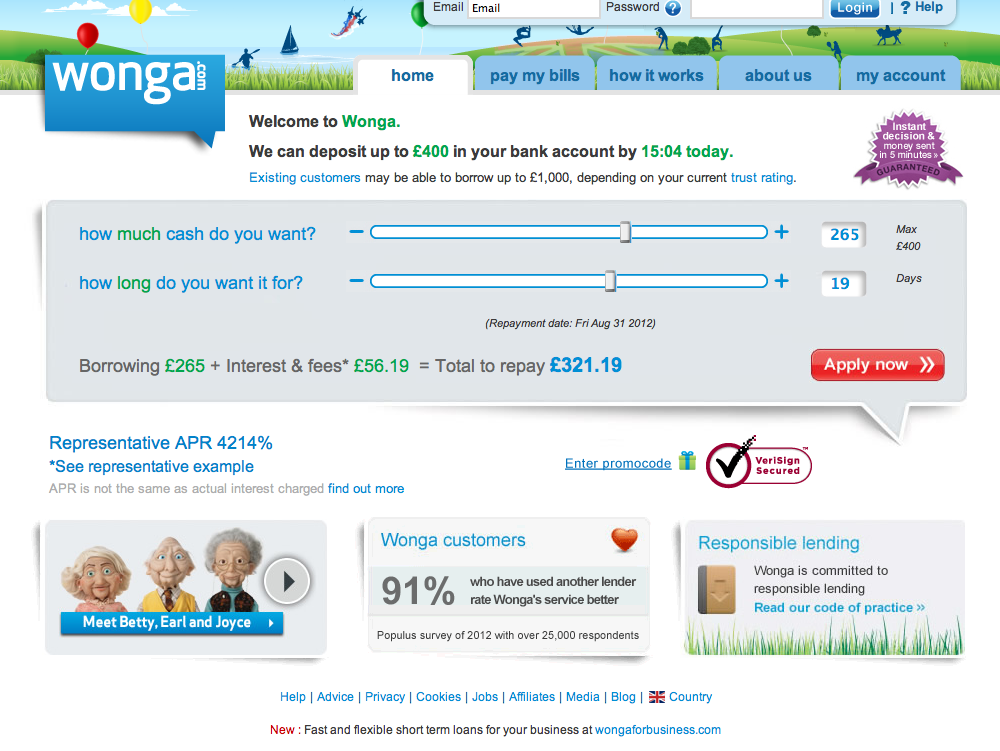 There has been an exponential growth in the UK payday loan market, with an increasing incidence of our clients in Scotland being unable to pay their rent, mortgage or utility bills due to indebtedness to exploitative payday loans. With payday loans having equvialent APRs of 3,000 to 5,000% - clearly usury, unethical and unfair - Govan Law Centre (GLC) believes the Scottish Government and Parliament must look to a solution in the public and consumer interests.
The Minister for Debt and Insolvency in Scotland, Fergus Ewing MSP, has accepted there is a problem with payday lending and has stated his belief that greater regulation is needed by Westminster. Yet, there is much the Scottish Parliament could do to help Scots struggling to meet the unfair and unsustainable costs of high interest credit.
GLC is publishing a Discussion Paper, which proposes the creation of a new sub-category of the Debt Arrangement Scheme (DAS), which could be designed to provide a fair but flexible form of debt relief for high interest credit only. This would mean that instead of all debts being repaid as part of a Debt Payment Programme (DPP), the debtor would have an option of repaying payday loans in a 'mini-DAS' on a fast track basis.
Such a 'fast track' scheme could target usury rate loans by ensuring the principal sum(s) were repaid fairly within 24 months, with high interest and roll-over charges being suspended and written off following a successful repayment of the debt. Such a scheme could provide essential respite to consumers in Scotland trapped in a cycle of payday loans, enabling other priority debts to be paid, and helping citizens to take control of their financial position. We would welcome your thoughts on this proposal: GLC Discussion Paper on a new Fast Track DAS for usury rate loans in Scotland.
Finally, we believe that the Scottish Ministers already have power from sections 7 and 7A of the Debt Arrangement and Attachment (Scotland) Act 2002 to introduce a Fast Track DAS for payday loans right now, without the need for primary legislation or undue delay.
Subscribe to:
Posts (Atom)


